
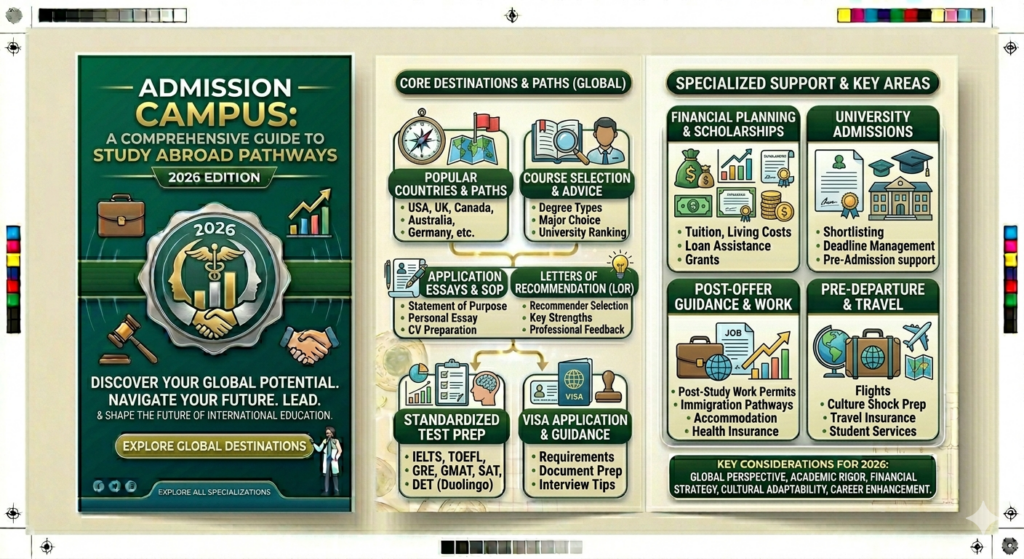
Delhi, with its vast student population and excellent connectivity, is a major hub for studying abroad. Whether you’re interested in undergraduate studies or looking for postgraduate opportunities, here’s a comprehensive guide to help you navigate the process.
Why Study Abroad?
Academic Excellence: Gain access to world-renowned universities and unique academic programs not available in India.
Global Exposure: Immerse yourself in a new culture, develop intercultural skills, and build a truly international network.
Career Enhancement: Enhance your resume with a foreign degree, open up a world of global career opportunities, and significantly increase your earning potential.
Personal Growth: Develop independence, resilience, and adaptability while learning a new language and discovering a new perspective.
Popular Destinations from Delhi:
USA: Home to many of the world’s top-ranked universities, offering a vast array of programs and excellent research opportunities.
UK: Known for its rigorous academic standards, iconic universities, and generally shorter degree programs compared to the USA.
Canada: Offers high-quality education, a welcoming multicultural environment, and excellent post-study work permits and potential pathways to permanent residency.
Germany: Renowned for its world-class engineering and technology programs, often with low or no tuition fees for international students.
Australia: Known for its vibrant cities, strong focus on research, and generally streamlined visa process.
Others: Increasingly popular destinations include France, Ireland, Singapore, New Zealand, and the UAE (particularly Dubai), offering unique advantages and diverse academic environments.
Study Abroad Process:
Research & Identify Goals:
What do you want to study? (Undergraduate, Postgraduate, Masters, PhD, etc.)
Where do you want to study? (Consider cost, lifestyle, post-study opportunities)
What is your budget? (Tuition fees, living expenses)
Standardized Tests:
Depending on your destination and course, you may need to take specific exams:
English Proficiency: IELTS, TOEFL, Duolingo English Test (DET)
Academic: SAT, ACT (for US undergrad), GRE, GMAT (for US grad/MBA)
Shortlist Universities:
Research universities based on your academic background, test scores, budget, and desired location. Consider factors like course curriculum, faculty, research facilities, campus life, and student feedback.
Prepare Application Documents:
This usually includes:
Transcripts (from high school and/or university)
Letter of Recommendation (LORs) from teachers or professional referees.
Statement of Purpose (SOP) or personal essay explaining your motivation.
CV/Resume (highlighting academic and extracurricular achievements)
Test Score Reports (IELTS, TOEFL, GRE, etc.)
Portfolio (for creative courses)
Submit Applications:
Apply through individual university websites or centralized application systems (like UCAS for UK or Common App for US). Keep track of application deadlines, which vary significantly by destination and course.
Receive Offer Letters:
If successful, you will receive conditional or unconditional offer letters. Carefully review the terms of each offer.
Financial Planning & Scholarships:
Calculate the total cost of your education and living expenses. Explore scholarships, grants, and student loans. Many universities and government bodies offer financial aid to international students.
Visa Application:
This is a critical step. Understand the visa requirements for your chosen country. Prepare all necessary documents, including financial proof, acceptance letter from the university, health insurance, and valid passport.
Pre-Departure Preparation:
Book flights, arrange accommodation, purchase student health insurance, and attend pre-departure briefings (often organized by study abroad consultants in Delhi). Connect with other students who are also going.
Study Abroad Consultancies in Delhi:
Delhi has numerous consultancies that can help you with every step of the study abroad journey. They offer services like:
Profile Assessment: Evaluating your chances of acceptance and suggesting suitable universities.
Test Preparation: Coaching for exams like IELTS, TOEFL, GRE, GMAT.
Document Assistance: Help with writing SOPs, resumes, and preparing LORs.
Application Processing: Guiding you through the application forms and deadlines.
Visa Guidance: Providing expert advice on visa requirements and interview preparation.
Post-Offer Support: Assistance with financial planning, accommodation, and pre-departure briefings.
Some popular study abroad consultancies in Delhi include:
IDP Education: With multiple offices in Delhi and NCR (Connaught Place, Nehru Place, Rajouri Garden, Rohini, Noida, Gurgaon). A major global player with strong links to universities in English-speaking countries.
Edwise International: Offers comprehensive services for various destinations with several branches in Delhi NCR.
SI-UK (Study in UK): Specialized consultant for students looking to study in the United Kingdom, with an office in Connaught Place.
TC Global (The Chopras): Known for its experienced advisors and strong track record in student placements, with multiple branches in Delhi NCR.
LeapScholar: A technology-driven study abroad platform providing extensive resources and end-to-end guidance.
KC Overseas Education: Focuses on multiple destinations and offers personalized counseling with several offices in Delhi NCR.
Key Tips for Delhi Students:
Start Early: The study abroad process takes time. Start your research at least 12-18 months before you plan to depart.
Focus on Academics & Extracurriculars: Good grades and a strong portfolio are crucial for top universities.
Perfect Your SOP: This is your chance to shine and tell your story.
Choose Your Consultancy Wisely: While consultants can be helpful, make sure they align with your goals and destination. Do your own research as well.
Network: Connect with students who have studied abroad or are currently studying in your target destination for valuable insights.
Studying abroad is a life-changing experience. By planning meticulously, staying focused, and seeking the right guidance, you can make your dream a reality and embark on an exciting journey of academic and personal growth.