
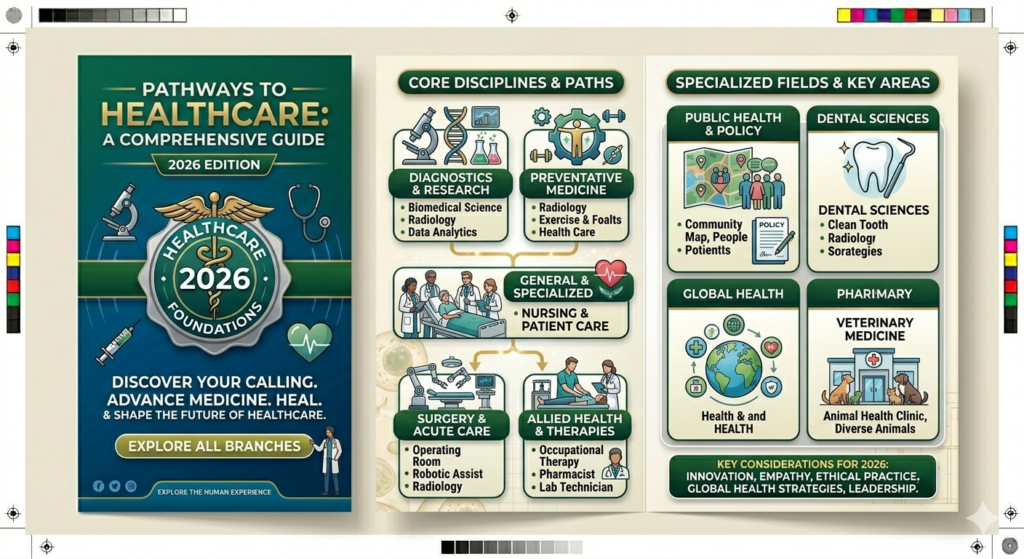
The medical field offers a wide range of career paths, from diagnosing and treating patients to research, therapy, and managing healthcare systems. Below is a structured breakdown of the primary educational routes available as of 2026.
A Comprehensive Guide to Medical & Healthcare Courses
The following disciplines are categorized to highlight foundational sciences, direct patient care, and specialized diagnostic fields, as seen in the visual guide.
1. Core Medical Disciplines (Doctoral-Level Foundations)
These are the primary degrees required to practice medicine and direct patient care at the highest level.
Doctor of Medicine (M.D.) / MBBS: The standard degree for general physicians and specialists, focusing on diagnosis, treatment, and medical research.
Doctor of Osteopathic Medicine (D.O.): A fully licensed degree with a whole-person approach to medicine, focusing on prevention and the musculoskeletal system.
Bachelor of Dental Surgery (BDS) / DDS: Specialized training for dental surgeons, focusing on oral health and craniofacial care.
Doctor of Pharmacy (Pharm.D.): An advanced clinical degree focusing on medication management, drug therapy, and counseling.
2. Advanced Nursing & Clinical Practice
These courses prepare individuals for essential roles in patient management, nursing care, and preventative medicine.
Bachelor of Science in Nursing (BSN): The foundational degree for registered nurses (RNs), covering clinical skills and nursing science.
Master of Science in Nursing (MSN): Prepares nurses for advanced practice roles, such as nurse practitioners, educators, or administrators.
Master of Public Health (MPH): Focuses on community health, epidemiology, and health policy management (often a crucial adjunct to clinical degrees).
3. Allied Health, Diagnostic, & Therapeutic Sciences
These crucial fields focus on medical technology, patient rehabilitation, and direct diagnostic support.
Veterinary Medicine (DVM): The study of animal health, from diagnostics to surgery across species.
Medical Laboratory Science (BMLS): Training in the complex analysis of blood, tissue, and body fluids to aid in diagnosis.
Physiotherapy (BPT) / Physical Therapy: Focuses on rehabilitating movement, function, and managing pain.
Biomedical Science / Biotechnology: Advanced research-focused degrees that underpin drug development and medical innovation.
Medical Imaging (Radiology Tech): Training in the use of sophisticated equipment like MRI, CT, and X-ray.
Occupational Therapy: Helping patients regain independence in daily activities after illness or injury.